
Recurrent bladder carcinoma in situ after BCG
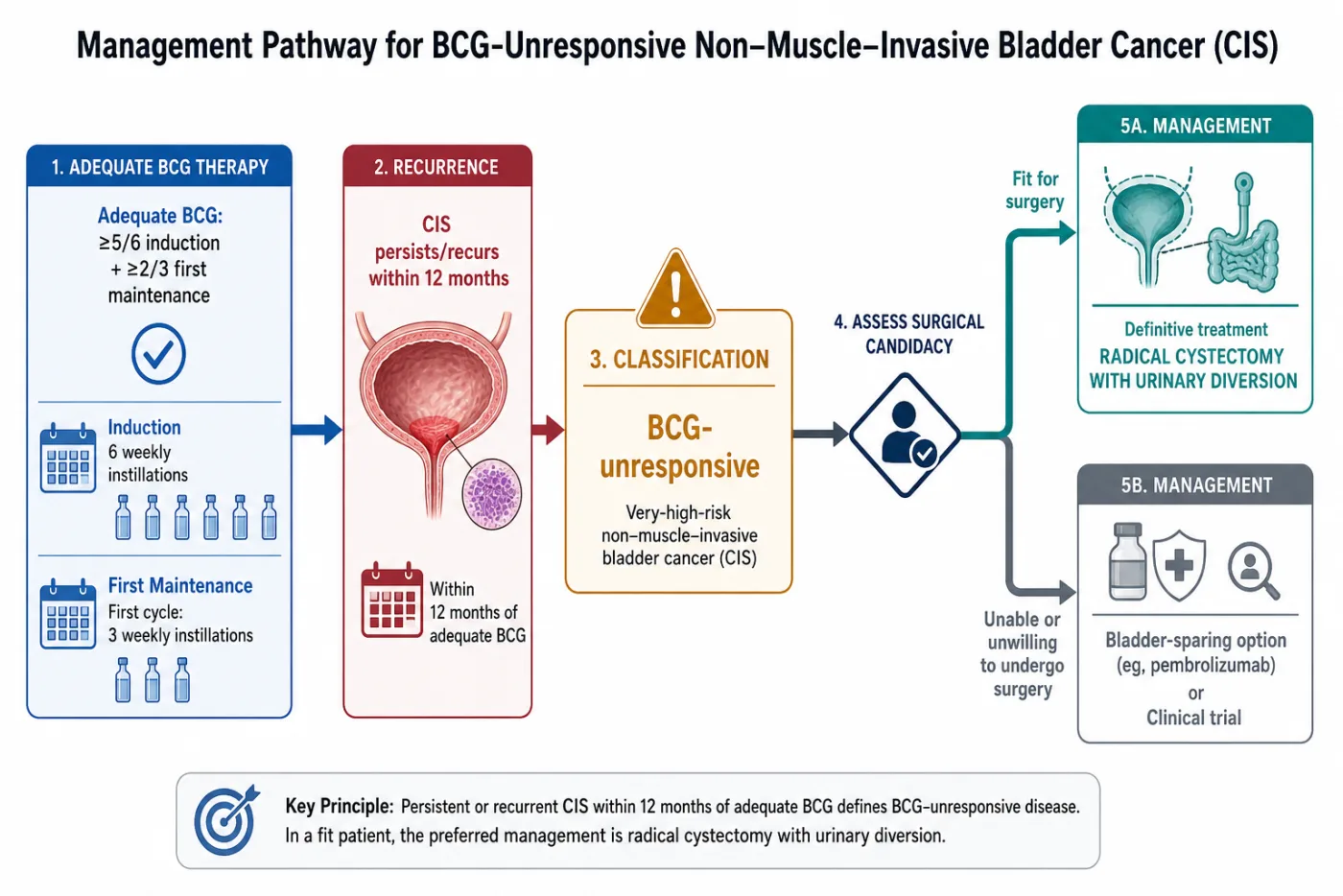
Summary
- For CIS, BCG-unresponsive disease means persistent or recurrent CIS within 12 months of adequate BCG: at least 5 of 6 induction doses and 2 of 3 doses in the first maintenance cycle.
- BCG-unresponsive disease is a very-high-risk feature, and in a fit patient radical cystectomy or a clinical trial is the first-choice approach.
- Bladder-sparing options such as pembrolizumab or intravesical therapy are alternatives to cystectomy, and KEYNOTE-057 tested pembrolizumab single-arm only in patients who could not have or declined cystectomy.
- Repeat BCG induction suits BCG-exposed disease after an inadequate course, and chemoradiotherapy is for recurrent high-grade papillary disease in patients who are not cystectomy candidates.
Evidence Sources
Impact of chronic rh
A Systematic Review
The value and limita
Does early cystectom
Intravesical nadofar
Pembrolizumab monoth
Diagnosis and Treatm
Definitions, End Poi
Can restaging transu
Role of immediate ra
Prognostic significa
Want the rest of the question bank?
The full bank has 2,600+ hematology and oncology board questions like these, with your weak areas tracked as you go. The trial is free for 7 days and needs no card.
These questions are for board preparation and teaching. They are not medical advice for a patient.