
HER2-positive metastatic colorectal cancer after chemotherapy
Summary
- Every metastatic colorectal tumor is tested for HER2 together with RAS and BRAF; HER2-positive means IHC 3+, IHC 2+ with positive ISH, or amplification by next-generation sequencing.
- HER2-positive, RAS and BRAF wild-type disease after oxaliplatin and irinotecan can be treated with trastuzumab plus tucatinib (MOUNTAINEER) or plus pertuzumab, provided no HER2 inhibitor was given before.
- Fam-trastuzumab deruxtecan is a separate option limited to IHC 3+ tumors and carries a lung toxicity warning.
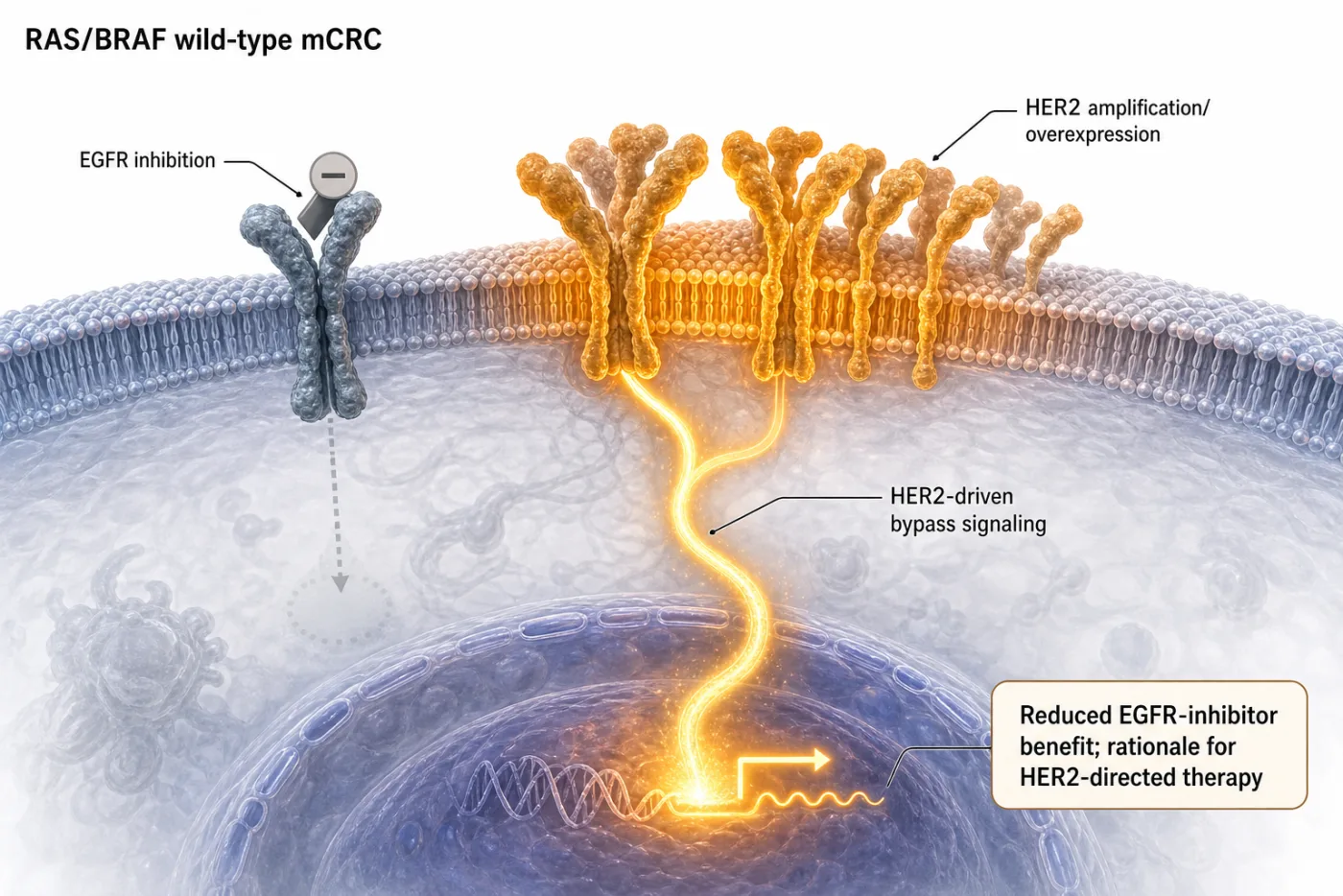
- Initial results suggest HER2 amplification may predict resistance to EGFR antibodies such as cetuximab and panitumumab.
- Regorafenib, trifluridine/tipiracil and fruquintinib are kept for disease that has progressed through the available regimens.
Evidence Sources
HER2 Positivity Pred
HERACLES: Dual-targe
MyPathway: Pertuzuma
MOUNTAINEER phase 2
MOUNTAINEER (NCT0304
Trastuzumab Plus Per
DESTINY-CRC01
Want the rest of the question bank?
The full bank has 2,600+ hematology and oncology board questions like these, with your weak areas tracked as you go. The trial is free for 7 days and needs no card.
These questions are for board preparation and teaching. They are not medical advice for a patient.