
Acute promyelocytic leukemia with a high white count: induction
Summary
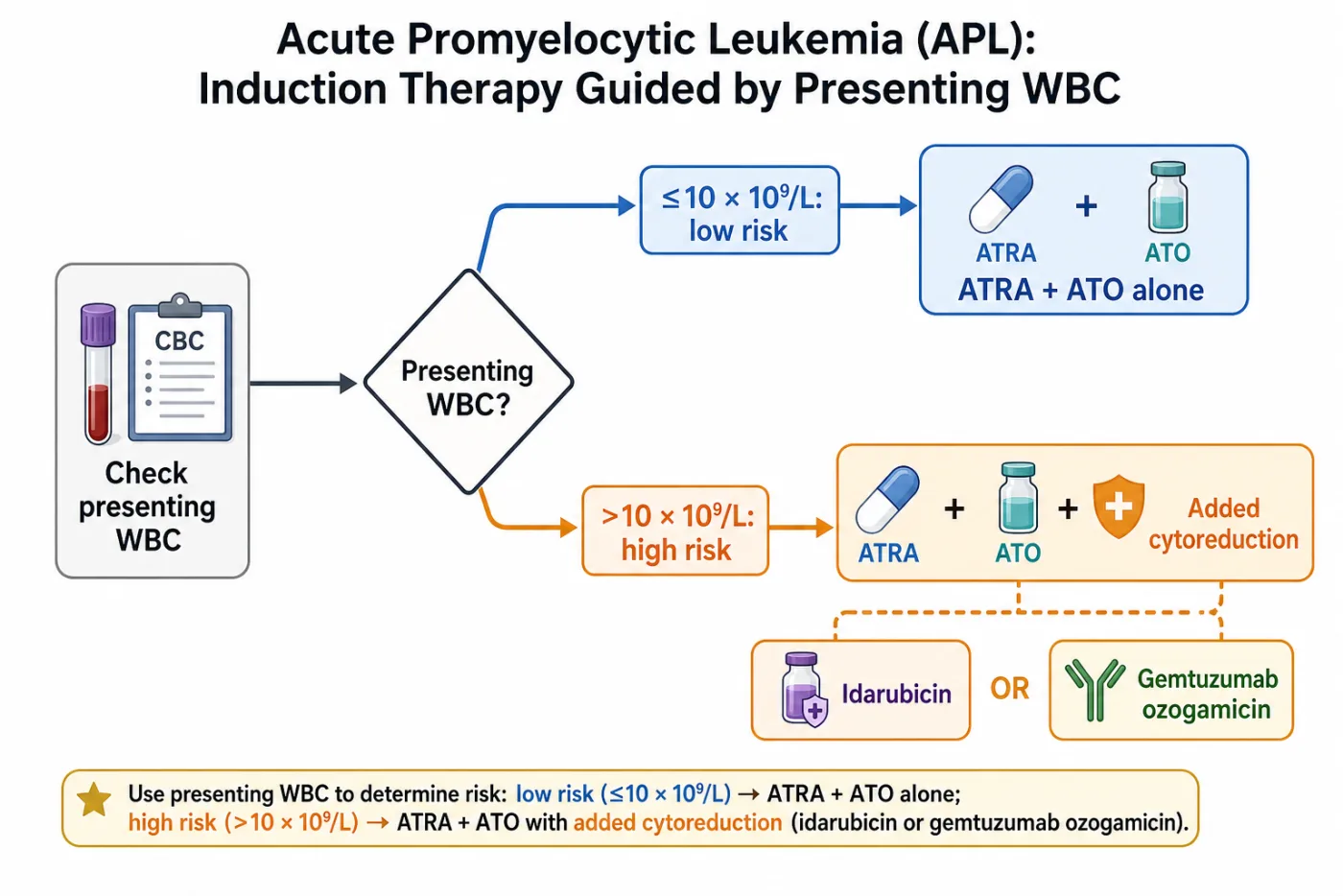
- APL induction is chosen by the presenting WBC: 10 x 10^9/L or less is low-risk and gets ATRA plus ATO alone, while above 10 x 10^9/L is high-risk.
- High-risk APL adds a cytoreductive agent to ATRA plus ATO: idarubicin, or gemtuzumab ozogamicin, which carries a risk of sinusoidal obstruction syndrome.
- In the APOLLO trial in high-risk APL, ATRA plus ATO with low-dose idarubicin gave better event-free survival and fewer molecular relapses than ATRA plus idarubicin chemotherapy.
- ATRA plus chemotherapy without arsenic is kept for patients who cannot receive ATO.
- Patients with a WBC above 10 x 10^9/L, and all patients on ATRA-ATO, receive corticosteroid prophylaxis against differentiation syndrome.
Evidence Sources
Efficacy and safety
Insights into the Al
Arsenic Trioxide and
Acute promyelocytic
HARMONY project anal
Arsenic Trioxide and
Curative strategies
ALLG APML4 phase 2
Long-term follow-up
Want the rest of the question bank?
The full bank has 2,600+ hematology and oncology board questions like these, with your weak areas tracked as you go. The trial is free for 7 days and needs no card.
These questions are for board preparation and teaching. They are not medical advice for a patient.