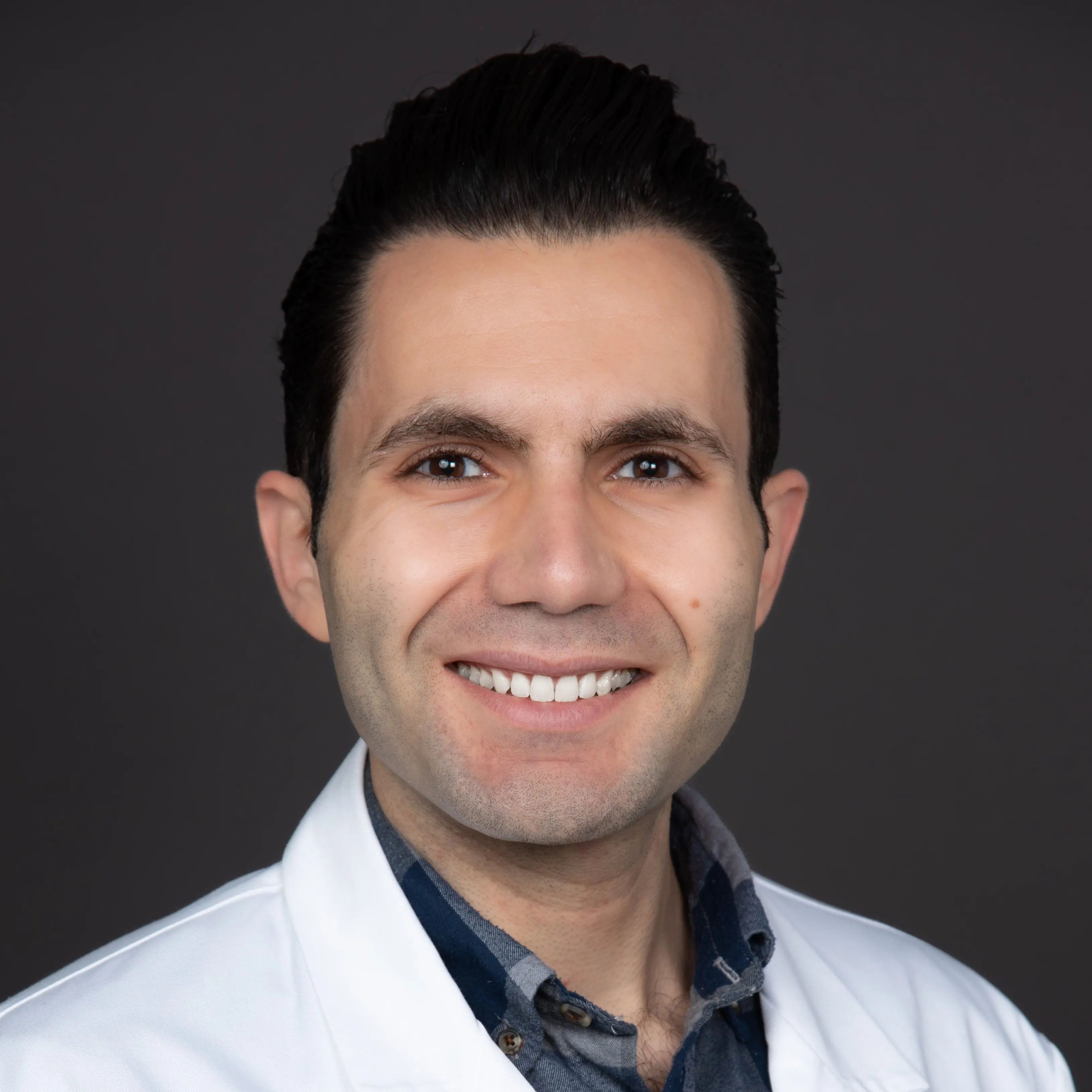
Written by Dr. Roupen Odabashian MD, FRCPC
Oncologist | Founder, MeDucation AI | Updated July 2026
The short answer: should you buy ASH-SAP in 2026?
ASH-SAP is the most representative single resource for the style and structure of the ABIM Hematology board exam, and it doubles as CME/MOC — which makes it worth it for most hematology fellows and recertifying hematologists. But it is a review text with a modest question set, not a high-volume grind bank, so it works best paired with a dedicated question bank. And there's a catch that trips people up: the 8th edition's online access and credit expired on June 30, 2025, and a 9th edition is now the active product — so make sure you're buying the current one.
What is ASH-SAP?
ASH-SAP is the American Society of Hematology's Self-Assessment Program: a peer-reviewed hematology review textbook bundled with self-assessment tests, covering adult and pediatric, benign and malignant hematology. It's the hematology counterpart to ASCO-SEP in oncology, and fellows consistently describe it as the resource whose questions most resemble the actual ABIM Hematology exam.
Edition status matters in 2026. A 9th edition is now the current, active product in the ASH Store and publications catalog.[1] The widely-used 8th edition (released June 2022) had its online access and CME/MOC eligibility expire on June 30, 2025. If you're buying now, confirm you're getting 9th-edition access — an expired 8th-edition login is worthless for credit.
Attribute | 8th edition (verified) | 9th edition (current) |
|---|---|---|
Format | Online textbook + digital question bank; print/digital bundle option | Digital (current product) |
Questions | 259 multiple-choice questions across six tests | Six online tests; ASH does not state a question count (ASH Academy, checked 2026-10-15) |
CME / MOC | Up to 75 AMA PRA Category 1 Credits; up to 75 ABIM MOC points | 45 CME/MOC credits across six tests (ASH Store, checked 2026-10-15) |
Access / credit status | Expired June 30, 2025 | Active in 2026 |
I'm not going to invent 9th-edition question counts: as of 2026-10-15 the ASH Store and ASH Academy pages list six online tests and 45 CME/MOC credits but no question count. Treat the 8th-edition question count as a baseline and confirm the current specs at purchase.
Does ASH-SAP offer CME and MOC credit?
Yes, and this is one of its biggest advantages over a plain question bank. The 8th edition delivered up to 75 AMA PRA Category 1 Credits and up to 75 ABIM Medical Knowledge MOC points, spread across six online tests, with a required passing score of 80% on each self-assessment to claim credit. It also met continuing-certification requirements for pediatrics and pathology boards.
For a recertifying hematologist, that's the whole value proposition in one line: you review and retire a large block of MOC points at the same time. A standalone question bank like HOQ generally doesn't do that (BoardVitals is an exception, via a paid CME add-on).[8]
How much does ASH-SAP cost?
Here's where I have to be careful. ASH lists the ASH-SAP 9th Edition prices in the ASH Store (checked 2026-10-15; see the table below), and when I was in fellowship, I remember paying around $225 per year as part of an enterprise plan for my program . What I can verify:
Item | Detail |
|---|---|
Print and digital textbook, 9th ed. (ASH Store) | Resident/GradMed student $290; Associate $430; Member $570; non-member $730 (checked 2026-10-15)[1] |
Digital edition, 9th ed. (ASH Store) | Resident/GradMed student $200; Associate $310; Member $470; non-member $600 (checked 2026-10-15)[1] |
Fellows in ASH "Fundamentals for Hematology Fellows" | Digital ASH-SAP access included at no additional cost |
That last row is the money-saver most fellows miss: if your program enrolls you in ASH's Fundamentals for Hematology Fellows, you get digital ASH-SAP access free, plus complimentary ASH Associate membership.[5] Before you pay out of pocket, ask your program coordinator whether you're already enrolled.
How well does ASH-SAP match the ABIM Hematology exam?
Very well on structure — fellows call it "the most representative of the actual board exam question style." Here's the blueprint you're being tested against, from ABIM's January 2026 Hematology certification blueprint[6]:
Content category | % of exam |
|---|---|
Hematologic Neoplastic Disorders | 35% |
Coagulation | 27% |
Hematopoietic System | 25% |
Cellular Therapy | 8% |
Transfusion Medicine | 5% |
A cross-cutting note in the blueprint: pregnancy- and contraception-related topics make up roughly 4% of the assessment.[6] The practical takeaway from fellows who've sat it: benign hematology is heavily represented, von Willebrand disease, hemolytic anemias, and coagulation show up more than oncology-heavy trainees expect. With coagulation and the hematopoietic system together making up more than half the blueprint, that tracks. If your clinical time skews malignant, this is exactly where ASH-SAP's benign-heme depth earns its keep.
What do fellows say about ASH-SAP?
On Student Doctor Network, the sentiment is favorable and specific: ASH-SAP questions are "better written than HOQ for benign heme," it's the "best foundation" for hematology, and one attending who read it cover-to-cover twice reported scoring in the 90th percentile. The consistent knock is volume, it's a review program with a modest question count, not a bottomless bank, so it won't give you thousands of reps on its own.
However, the question bank is not user-friendly. While the content could be valuable, the question bank’s usability is a significant drawback. Many users have expressed frustration with the requirement to answer questions and receive the correct answer before the explanation is revealed. This can be particularly frustrating, as it may lead to losing the ability to answer questions after three attempts. Additionally, some questions rely solely on recall, such as testing a specific gene in a rare disease that a hematologist might not encounter during their entire career. This can be inconvenient and challenging to navigate for many users.
Strengths | Weaknesses |
|---|---|
Most representative of real exam question style | Modest question volume; not a grind bank |
Strong benign-heme coverage (where the exam is dense) | Edition/access confusion (8th expired June 2025) |
Doubles as CME/MOC (45 credits/points for the 9th edition; up to 75 for the 8th) | Price depends on membership type (digital: $200 for residents to $600 for non-members) |
Official ASH authorship and peer review | Best used with a separate question bank hard to navigate user interface |
What should you pair ASH-SAP with?
Because ASH-SAP is a review program rather than a high-volume bank, most fellows add a dedicated question bank and a few free ASH assets. Here's the honest landscape.
Resource | What it is | Price | Notes |
|---|---|---|---|
HOQ (Hematology Oncology Questions) | High-volume question bank | $65 / 6 months[7] | Additional bank Fellow's Purchase Just to solve more questions. outdated UI/UX, very long explanations |
BoardVitals Heme/Onc | Question bank + optional CME | $159–$429[8] | More balanced difficulty; paid CME add-on |
MeDucation AI | Physician-written bank + AI study tools | ~$225 / year | Spaced repetition, mind maps, Detailed PubMed-linked explanations. Tools to help you study and save your notes in the platform |
ASH Image Bank | Peer-reviewed hematology image atlas | Free/low-cost | Essential for smear/marrow morphology questions |
ASH Hematology Review Series | Blueprint-mapped lecture series | Not published on page | Weekly on-demand lectures + live study sessions, Jun–Nov 2026 |
A few things worth saying plainly. The ASH Image Bank is free-to-low-cost and indispensable, hematology tests morphology hard, and no amount of text substitutes for looking at peripheral smears and bone marrow. The ASH Hematology Review Series is explicitly built "for fellows preparing to take the internal medicine hematology certification exam," running weekly from June through November 2026, timed to finish before the fall boards. And note: TrueLearn and UWorld do not offer a hematology subspecialty bank at all, so ignore anyone who lists them for heme boards.
Where MeDucation fits: our bank is written and reviewed by practicing board-certified hematologist-oncologists, with every distractor explained and linked to PubMed, wrapped in an AI study layer that turns your reps into FSRS spaced-repetition flashcards and living mind maps. In addition to our question bank, we have a notebook section where you can take notes without leaving the platform. We also provide tools to assist your study, such as converting your notes into textbook-style images to enhance understanding and grasp complex concepts. Furthermore, we have a section where you can upload lectures and review papers, which are then transformed into highly crafted multiple-choice questions that surpass any other multiple-choice question generator available on the market.
If you want your question review to build durable memory rather than evaporate, that's our edge.
The bottom line on ASH-SAP for 2026
Buy ASH-SAP if you want the most exam-representative review program and you value CME/MOC — but check whether your program already gives you free access, confirm you're buying the 9th edition, and plan to pair it with a real question bank. For the full head-to-head on question banks, see our hematology-oncology question bank comparison for 2026. To slot ASH-SAP into an actual timeline, use our 6-month ABIM board study plan, and for the overall exam approach, our board review strategy for ITE and ABIM success.
Frequently asked questions
Is ASH-SAP enough to pass the hematology boards by itself?
It's the strongest single foundation for exam-style hematology, but its question volume is modest, so most fellows pair it with a dedicated question bank for reps and add the ASH Image Bank for morphology.
Which ASH-SAP edition is current in 2026?
The 9th edition is the current, active product. The 8th edition's online access and CME/MOC credit expired June 30, 2025, so avoid an expired 8th-edition subscription.
How many CME credits does ASH-SAP give?
The 9th edition offers 45 CME/MOC credits across six online tests (ASH Store, checked 2026-10-15). The 8th edition offered up to 75 AMA PRA Category 1 Credits and up to 75 ABIM MOC points across six tests, requiring an 80% score on each to claim credit.
Can I get ASH-SAP for free as a fellow?
Often, yes. Fellows enrolled in ASH's Fundamentals for Hematology Fellows program receive digital ASH-SAP access at no additional cost, plus complimentary ASH Associate membership — ask your program coordinator before paying.[5]
What's the difference between ASH-SAP and ASCO-SEP?
ASH-SAP is ASH's hematology self-assessment program; ASCO-SEP is ASCO's medical oncology equivalent. Heme/onc fellows sitting both the hematology and medical oncology boards often use both, one for each specialty.
References
ASH Self-Assessment Program, Ninth Edition (current product listing) — ASH Store.
ASH-SAP CME/MOC information and access dates (8th edition) — ashpublications.org.
Student Doctor Network — "Question bank / study materials for boards."
Student Doctor Network — "HOQ qbank."
ASH Fundamentals for Hematology Fellows — benefits & access — hematology.org.
ABIM Hematology Blueprint for Certification, January 2026 — abim.org.
BoardVitals Oncology / Hematology Board Review — boardvitals.com.
MeDucation AI — meducationai.com/pricing.
ASH Image Bank — imagebank.hematology.org.
ASH Hematology Review Series (2026) — hematology.org.