
This oncology board review is the guide I wish I had during fellowship. The oncology boards are learnable — the content is finite, the question patterns are recognizable, and with the right exam strategy you can walk into exam day with genuine confidence, not just hope. Whether you're a hematology-oncology fellow preparing for the In-Training Examination (ITE) or the ABIM Medical Oncology Certification exam, the difference between passing and struggling is rarely about intelligence. It's about strategy and consistency. This board prep guide gives you both: a clear understanding of what you're being tested on, the study system that actually works, and the high-yield clinical knowledge that appears most often on exam day.
Understanding the Exam: ITE vs. ABIM Certification
The ITE is administered annually through ASCO, typically in the spring. It is not a licensure exam, but it predicts ABIM performance, reveals knowledge gaps by topic area, and shapes how your heme/onc program views your development. Format: ~200 multiple-choice questions covering solid tumors, hematologic malignancies, palliative care, genetics, and trial methodology.
The ABIM Oncology Certification Exam is the high-stakes licensure exam taken after fellowship completion. Pass rate ~80–85% on the first attempt — meaning a meaningful percentage of candidates fail. Format: ~260 questions in timed blocks.
Content breakdown:
Medical oncology (solid tumors) — ~50–55%
Hematology — ~30–35%
Palliative care, ethics, research methods, genetics — remainder
The certifying exam requires integrating multiple clinical data points, interpreting trial data, and applying guidelines to nuanced patient scenarios. It rewards deep, structured knowledge — not surface memorization.
The biggest mistake: Treating board prep as an event rather than a process — an exam strategy mistake that is almost universal. Fellows who start three months before the exam spend 90 days learning three years of subspecialty medicine. Fellows who study 30–60 minutes daily throughout fellowship spend exam month reviewing material they already know. The difference in both performance and stress is dramatic.
The Four Pillars of Effective Hematology-Oncology Board Prep
Pillar 1: Know the ABIM Blueprint. The ABIM publishes a detailed content specification for the certifying exam — this is the foundation of any serious board review. This is the most important document in your board prep — and most fellows have never read it. The blueprint tells you exactly which topics are tested and at what percentage. Read it. Allocate study time proportionally to content weighting.
Pillar 2: Master the landmark trials. For each major disease area, focus on clinical management: diagnostic workup, staging systems, first-line treatment approach, second-line options, and management of common complications. While knowing landmark trials helps contextualize guidelines, exam questions emphasize applying current standard-of-care recommendations to patient scenarios — not recalling trial acronyms or study arms. Practicing how to critically appraise trial evidence is also essential; see our journal club preparation guide for a structured approach.
Pillar 3: Build a daily study habit. 30–60 minutes per day, every day, using active recall (question-based study). Spaced repetition — repeatedly encountering material over time — produces dramatically better retention than massed cramming. Morning: 10–15 questions on a weak topic. Evening: review a topic summary or handout. If you're just starting out, our guide on your first year as a heme/onc fellow covers how to build these habits from day one.
Pillar 4: Use your ITE performance report strategically. After each ITE, identify your bottom 3 domains and build a targeted study plan. Identify your top 3 domains for maintenance-only review (once a month). Track year-over-year improvement in your weak areas.
From the Trenches: Writing Both the American and Canadian Board Exams
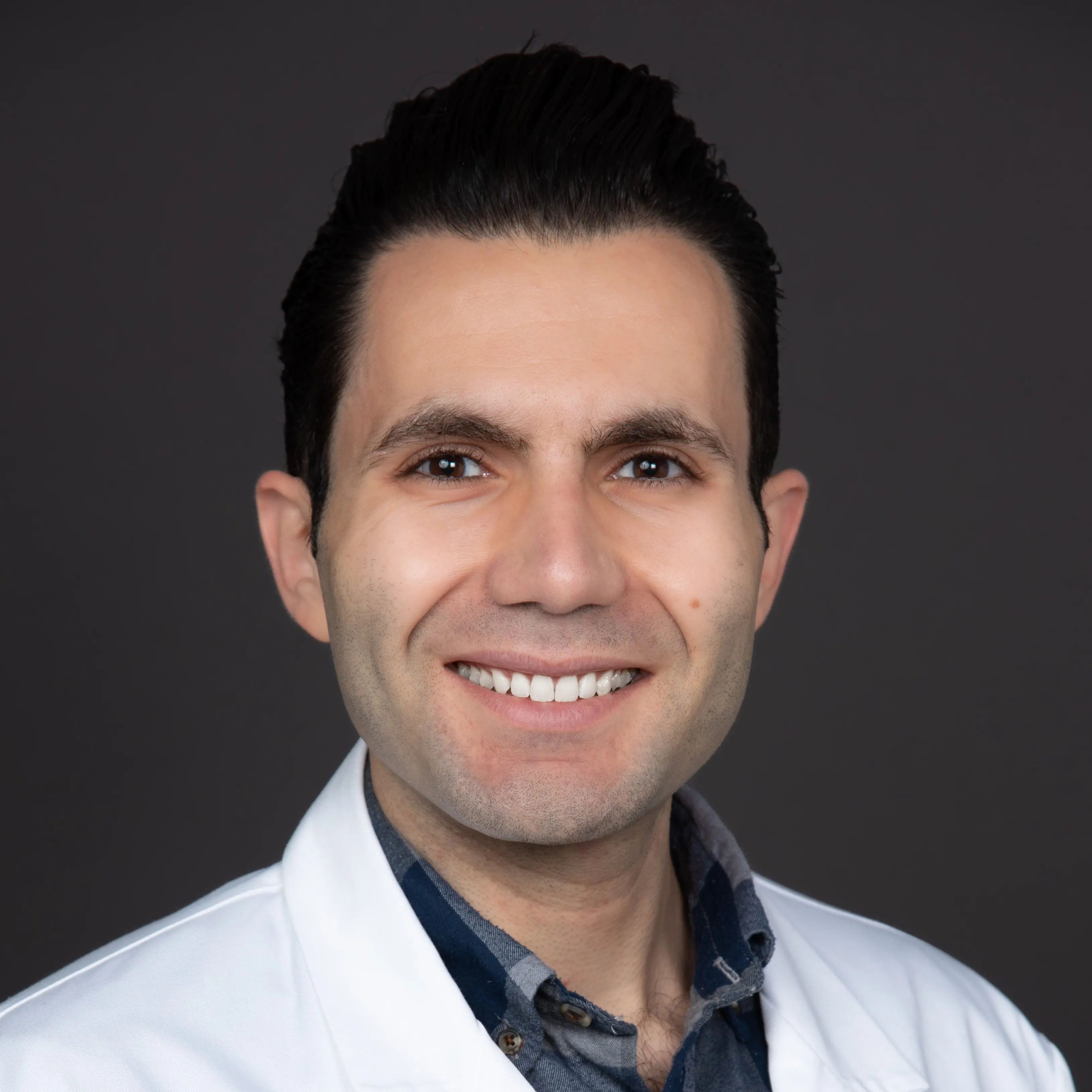
I wrote both the ABIM Medical Oncology Certification exam and the Royal College of Physicians and Surgeons of Canada exam. Here is what I can tell you from sitting in that chair.
The American exam was more straightforward than I expected. Most questions had four answer options, occasionally five, and the question stems were concise. The clinical scenario was usually tight, the pivot was clear, and the correct answer followed logically if you knew the material. That does not mean it was easy, but the format did not add unnecessary friction. If you knew the content, the question got out of your way.
The Canadian exam is a different animal. The question format, the expectations around clinical reasoning, and the overall rigor felt heavier. If you are preparing for both, do not assume they are equivalent.
Here is something I want to be direct about: the questions in our MeDucation question bank are harder than what you will see on the actual exam. That is intentional. If you can work through our question bank comfortably, the real exam will feel manageable. We build questions that force you to reason at a higher level, integrate multiple data points, and catch subtle distinctions, because that is the preparation that actually sticks.
On exam day, time was not the limiting factor. The exam is long, it is mentally exhausting, and by the afternoon your cognitive stamina will be tested more than your raw knowledge. The fellows who struggled were not the ones who ran out of time. They were the ones who ran out of energy and focus. Build that endurance during your prep by doing full timed blocks, not just quick question sessions.
One more thing. While I was studying for boards, I built the tools, prompts, and AI systems I needed to create high-quality questions efficiently. Those same systems, now significantly improved, are what power the MeDucation question bank today. They are getting better every single day based on what we learn from fellows using the platform. You are not just using a static resource; you are using something that evolves.
When should you start?
My Canadian exam was in September. I started serious, structured preparation in February. That gave me roughly seven months, and looking back, that was the right call. My strong recommendation is six months minimum. I know fellows who have done it in two months and passed, but I do not think that is a wise approach when the subject matter is cancer. You are not just preparing for a test. You are learning how to take care of patients with some of the most complex, high-stakes conditions in medicine. That knowledge needs time to settle. Fellowship is a marathon, not a sprint — and managing burnout while studying for boards is a real challenge. Going through the NCCN guidelines once in a hurry is not the same as living with them over several months and watching them connect to real patients you are seeing in clinic.
The NCCN strategy that changed how I studied
Every time I answered a question, I opened the relevant NCCN guideline. Not just to confirm the answer, but to actively ask myself: what else could they ask me from this same decision point?
NCCN guidelines are built on arrows and branching logic. If a question asked what to do after surgery when residual disease is present, I would immediately look at the branch for no residual disease. If the question was about a first-line regimen, I would look at the second-line options. I was not reading to memorize. I was mapping the algorithm.
This approach is the single biggest difference between fellows who do well and fellows who plateau. Memorizing questions gives you pattern recognition for questions you have already seen. Learning the algorithm gives you a framework for questions you have never seen before, including the ones that will actually be on your exam. The exam writers know what the common questions are. They will test the branches you skipped.
Focus on understanding how decisions flow: what comes before, what comes after, what changes if one variable shifts. That is what the exam is actually testing.
Spaced Repetition
I used spaced repetition extensively throughout my board review preparation. Spaced repetition — the practice of reviewing material at increasing intervals — is one of the most evidence-based learning strategies available. It works because it leverages the psychological spacing effect: information is retained more effectively when study sessions are spread out over time rather than massed together.
The challenge with spaced repetition is that creating high-quality flashcards is incredibly time-consuming. I spent hours building my own flashcard decks, and while the learning was effective, the process was inefficient. That realization was one of the reasons I built MeDucation. We use the same spaced repetition algorithms that power the most effective learning systems, but we have integrated AI to generate flashcards automatically from the content you are studying. You get the benefit of spaced repetition without the overhead of manual card creation.
Time Management on Exam Day
Time was more than adequate during the exam. I had sixty questions allocated over two hours, which gave me plenty of time to read each question carefully, think through the answer, and review flagged questions at the end of the block. The format is very similar to the American Board of Internal Medicine exam, and the questions were not long. The stems were concise and the clinical scenarios were clear. You will not feel rushed if you maintain a steady pace of around 90 seconds per question.
What else should you know going into this exam as a fellow?
The exam tests clinical judgment, not trivia. Vague recall will not carry you through nuanced scenarios.
Know your landmark trials cold, not just the headline result but the patient population, the comparator, and the caveat.
On exam day, trust your preparation. Second-guessing your first instinct on clear questions is where points get lost.
📋 Key Takeaways
Study 30–60 min/day from year one; don't treat board prep as a last-minute event
Read the ABIM blueprint and allocate study time proportionally to content weighting
For each landmark trial, know: population, comparator, key result, primary endpoint, major toxicity
Memorize molecular mutations + targeted therapies and oncologic emergency management cold
Use your ITE performance report each year to target specific knowledge gaps
The final 30 days are for consolidation — not new learning
Build your board-level knowledge from day one of fellowship. Try MeducationAI free — question bank, clinical trial breakdowns, Hippocrates AI, and expert-curated handouts at meducationai.com.
About the Author
Written by Roupen Odabashian, MD. Board-certified hematologist-oncologist and founder of MeDucation AI.