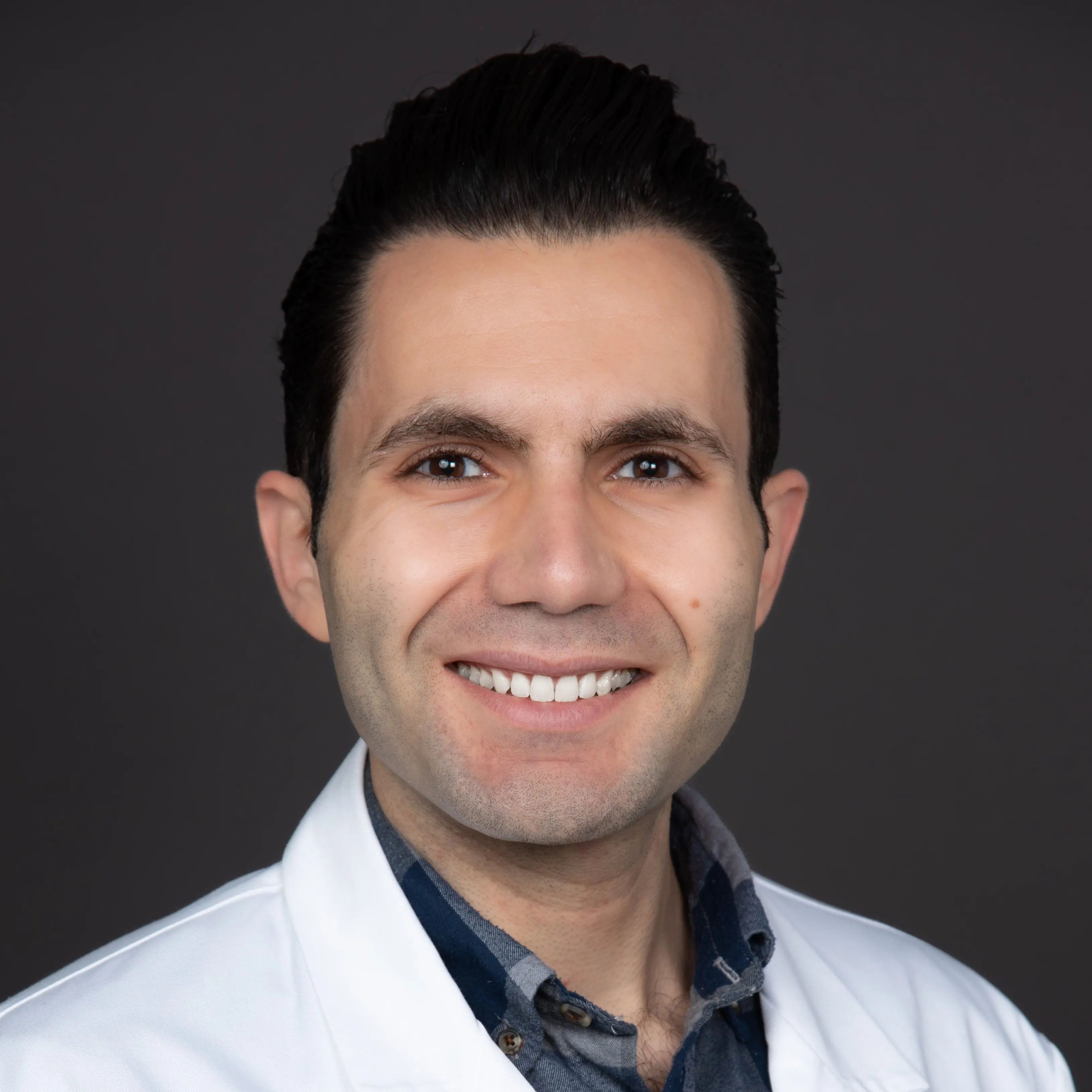
By Dr. Roupen Odabashian MD, FRCPC | Hematologist Oncologist | Founder, MeducationAI
Published April 2026
How to pass the ABIM Medical Oncology boards comes down to how you study, not how many hours you log. Across the fellows I have coached over the past several years, the candidates who passed comfortably did six things consistently that the non-passers did not: they started question bank work in the first six months of fellowship rather than in the final ten weeks; they treated trial knowledge as a study category rather than incidental reading; they did not skip low-yield organ systems; they maintained a mistake log; they sat timed mixed blocks weekly; and they accepted that the exam tests applied reasoning rather than recall. This article is the strategy I give them.
TL;DR — How to pass the ABIM Medical Oncology boards
Start question bank work in the first 6 months of fellowship, not the final 10 weeks — early daily exposure is the single biggest predictor of passing the ABIM Medical Oncology boards.
Treat landmark trials as a dedicated study category. Most exam questions hinge on which trial drove the clinical decision, not on regimen memorization.
Maintain a mistake log: topic, why the right answer was right, why your choice was wrong. Revisit weekly. Highest-yield habit in board prep.
Sit at least one timed 40-question mixed block per week in the final 8 weeks to build pacing instinct and exam-day stamina.
Cover the low-volume organ systems (sarcoma, head and neck, mesothelioma, CUP). They show up. Fellows who skip them lose easy points.
Use a 16-week pass plan: foundation and early Qbank → topic blocks and trial log → mixed blocks and pacing → weakness drilling → tapered review.
What separates passers from non-passers on the ABIM Medical Oncology boards?
Passers approach the ABIM Medical Oncology boards as an applied reasoning test, not a recall test, and they build that orientation into their daily study habits months before the exam. They start the question bank early, treat landmark trials as a study category, maintain a mistake log, sit timed mixed blocks weekly, and refuse to skip low-volume organ systems. Non-passers compress 18 months of learning into 10 weeks of cramming and rely on passive reading. The score gap tracks the habit gap, not the IQ gap.
This is a strategy article, not a blueprint summary. For the blueprint and recommended resources, see the complete oncology board review strategy for ITE and ABIM success. What follows is what fellows actually do differently when they pass comfortably.
Six things passers do differently
They start early
The single biggest difference between passers and non-passers is when they start question bank work. Fellows who begin questions in the first six months of fellowship at a low daily dose of 10 to 20 questions outperform fellows who delay until the final 10 weeks, even when the second group studies more total hours. Early daily exposure builds pattern recognition that cramming cannot replicate, and it surfaces weak topics while there is still time to fix them.
They treat trial knowledge as a study category
The ABIM Medical Oncology exam is full of trial-driven scenarios disguised as clinical vignettes. A question about whether to add pertuzumab to trastuzumab in HER2-positive metastatic breast cancer is really a question about CLEOPATRA.[1] A question about adjuvant immunotherapy in resected stage III melanoma is really a question about KEYNOTE-054 or CheckMate 238.[2][3] Passers maintain a personal trial log — for each major cancer, the studies that define frontline therapy, the endpoints, and what they changed. Non-passers memorize regimens without understanding which trials drive which choices and get burned on application questions.
They do not skip low-volume organ systems
Sarcomas, head and neck cancers, mesothelioma, and cancers of unknown primary feel low-yield because they appear less often on the exam. They still appear. Fellows who skip these organ systems entirely lose easy points on test day. Cover them efficiently — a few hours per topic is enough for most fellows — but cover them.
They maintain a mistake log
Every wrong answer should generate one entry in a mistake log: the question topic, why the right answer was right, why the option you chose was wrong. Revisit weekly. This single habit is the highest-yield study tool I have ever seen in board prep, and it costs nothing. The mistake log forces active recall, surfaces persistent blind spots, and prevents the most common failure mode in fellow prep: getting a question wrong, reading the explanation once, and then getting a near-identical question wrong six weeks later.
They sit timed mixed blocks
Pacing is a separate skill from content knowledge. Fellows who study only in topic-locked blocks and never sit timed mixed blocks under exam conditions arrive at the test day surprised by how the cognitive load shifts when consecutive questions span colorectal, lymphoma, and lung cancer. Sit at least one timed mixed 40-question block per week in the final eight weeks. This is what builds exam-day stamina and pacing instinct.
They accept the exam tests reasoning
The ABIM Medical Oncology exam does not test memorization of doses, durations, or page numbers. It tests applied reasoning — the ability to pick between two reasonable options for a specific patient. Fellows who accept this early stop optimizing for memorization and start optimizing for application. Fellows who resist this keep building flashcard decks of regimens and stay frustrated that their question bank scores plateau.
What non-passers tend to do
Non-passers on the ABIM Medical Oncology boards usually share an inverse profile. They start late, compressing 18 months of learning into 10 weeks of cramming. They read passively — hours with ASCO-SEP or UpToDate without active recall practice, which creates the illusion of mastery without the substance. They skip the trial layer and memorize regimens. They over-study comfortable topics (breast cancer for the breast person, GU for the GU person) and minimize uncomfortable ones (sarcoma, CUP). They ignore the mistake log — read the explanation, move on, repeat the same mistake six weeks later. And they avoid timed mixed blocks until test day, arriving with no pacing instinct.
A mental model for the ABIM Medical Oncology exam
The ABIM Medical Oncology exam tests three cognitive layers: recognition (can you identify the diagnosis from a clinical vignette?), recall (can you state the next step or regimen for a recognized diagnosis?), and application (can you apply trial-level reasoning to choose between two reasonable options in a specific clinical context?). Most exam questions sit at the application layer, and that is where most fellows lose points. Train at the application layer.
A vignette describes a patient with metastatic colorectal cancer, KRAS wild-type, left-sided primary, ECOG 1. Two of the answer options are defensible regimens. The question is asking which one you would choose and why — which means it is asking which trial drove that choice. That is application, not recall.
How should you use a question bank to train application?
Use the question bank as your active recall layer, not as a passive reading exercise. The platform you choose should provide reasoning-level explanations on every answer option (not just the correct one), allow follow-up questions like "Why not the FOLFIRI plus bevacizumab option?", adapt to your weaknesses through spaced repetition, and provide clinical case simulations that test application in scenarios beyond MCQ format. If your Qbank only tells you the correct answer with a paragraph of explanation, you are getting half the value.
I built MeducationAI explicitly for this — AI explanations that walk through every option, conversational follow-up, spaced repetition tuned to your mistake log, and clinical case simulations. If you are evaluating options, see the hematology oncology question bank comparison for 2026.
A 16-week pass plan for the ABIM Medical Oncology boards
This 16-week pass plan is built around the six habits above and assumes you are starting roughly four months out from your test date. If you have more runway, stretch the foundation phase. If you have less, compress the foundation phase but do not skip the mixed blocks or the mistake log. For a more granular timeline, see the 6-month study plan for the ABIM hematology and oncology board exams.
Weeks 1–4: Foundation and early question bank use
15–20 questions per day, topic-locked
Read ASCO Curriculum or ASCO-SEP chapters in your weakest organ systems
Start the mistake log
Weeks 5–10: Topic blocks and trial log
30–40 questions per day, topic-locked
Build a personal trial log: for each major cancer, the studies that define frontline therapy
Continue the mistake log; revisit weekly
Add weekly clinical case simulations
Weeks 11–13: Mixed blocks and pacing
Mixed 40-question blocks under timed exam conditions, at least one per week
Topic-locked blocks as targeted weakness drilling between mixed blocks
Review the trial log
Weeks 14–15: Targeted weakness drilling
Spaced repetition surfaces only the topics you have not yet mastered
50–60 questions per day
Final mistake log review
Week 16: Tapered review
Reduce volume, increase rest
Confirm exam logistics
No new content in the final 72 hours
Test-day strategy that actually moves scores
Test-day strategy for the ABIM Medical Oncology boards is about preserving the cognition you already have, not adding new content. Eat and hydrate normally — caffeine and food choices that feel routine work better than novel test-day rituals. Take the scheduled breaks; cognitive performance drops measurably in long sections without rest. Mark for review and move on — do not burn five minutes on a single question. Trust your first instinct on recognition-layer questions; second-guessing is more often wrong than right when the change is between two reasonable answers and you have no new information. And on every application question, ask: which trial drove this scenario, what was the result, and what does that mean for this specific patient?
Closing thoughts
The fellows who pass the ABIM Medical Oncology boards comfortably are not the smartest fellows. They are the fellows who started early, used active recall consistently, treated trial knowledge as a study category, maintained a mistake log, sat timed mixed blocks, and accepted that the exam tests applied reasoning rather than memorization. None of these habits is hard. All of them require time and discipline.
If you want a heme/onc question bank built to train application — AI explanations, conversational follow-up, spaced repetition, case simulations — see how it compares in the 2026 hematology oncology question bank comparison. For the broader blueprint and resource list, see the oncology board review 2026 complete strategy. For what changed on the hematology side this year, see ABIM hematology board review: what changed in 2026. And if you want a deeper dive into top study strategies for the hematology oncology boards, that walks through the techniques referenced above.
Ready to train application instead of memorization? Try MeducationAI's hematology oncology question bank and see how AI-driven explanations and spaced repetition close the gap between recall and reasoning.
Frequently Asked Questions
How many questions should I do total before the ABIM Medical Oncology boards?
Most fellows who pass the ABIM Medical Oncology boards comfortably complete somewhere between 3,000 and 6,000 questions across the full prep period, spread over 12 to 18 months. The exact number matters less than the distribution: daily exposure in the early months, topic-locked blocks in the middle, and timed mixed blocks in the final eight weeks. Quality of review per question matters more than raw volume.
Should I take a board review course for the ABIM Medical Oncology exam?
A board review course can be useful for fellows who learn well from structured lectures and benefit from being walked through the blueprint in order. It is not a substitute for a question bank and active recall practice. If your budget is limited, prioritize a strong question bank with reasoning-level explanations over a lecture course. If you have both, use the course for blueprint coverage and the question bank for application training.
What if my ITE score was lower than expected?
Treat a lower-than-expected ITE score as actionable feedback, not a verdict. Identify the blueprint sections you scored lowest on and address them in the months following the ITE, using the mistake log and targeted topic blocks. Most fellows whose ITE scores improved year over year passed the ABIM Medical Oncology exam on the first attempt. Stable or declining ITE scores are the more meaningful warning sign.
Is the ABIM Medical Oncology exam easier or harder than the ITE?
The blueprints for the ABIM Medical Oncology exam and the ITE are similar. The ABIM exam tends to be slightly harder because it leans more heavily on applied reasoning and fewer pure recognition questions, but the difference is smaller than fellows expect. Strong ITE preparation transfers directly. If you can score competitively on the ITE in your final fellowship year, you are on track for the ABIM exam.[4]
How important is sleep in the final week before the ABIM Medical Oncology boards?
Sleep in the final week before the ABIM Medical Oncology boards is critical. Cognitive performance drops measurably with sleep deprivation, and the exam is a long, application-heavy test where reasoning bandwidth is the limiting resource. Prioritize sleep over last-minute content review in the final seven days. The marginal value of one more topic review is far lower than the marginal cost of arriving cognitively impaired.
Should I retake practice exams the day before the test?
No. The day before the ABIM Medical Oncology exam is for rest and logistical preparation, not new content or full practice exams. A full practice block the day before can drain the cognitive reserve you need for test day and amplify last-minute anxiety. Light review of your mistake log is the most you should do. Trust the work you have already done.
How early in fellowship should I start preparing for the ABIM Medical Oncology boards?
Start question bank work in the first six months of fellowship. A low daily dose of 10 to 20 questions, topic-locked to whatever rotation you are on, builds pattern recognition with minimal time cost and surfaces weak topics while there is still time to fix them. Formal blueprint review and mixed timed blocks come later, but the question bank habit should start almost immediately.