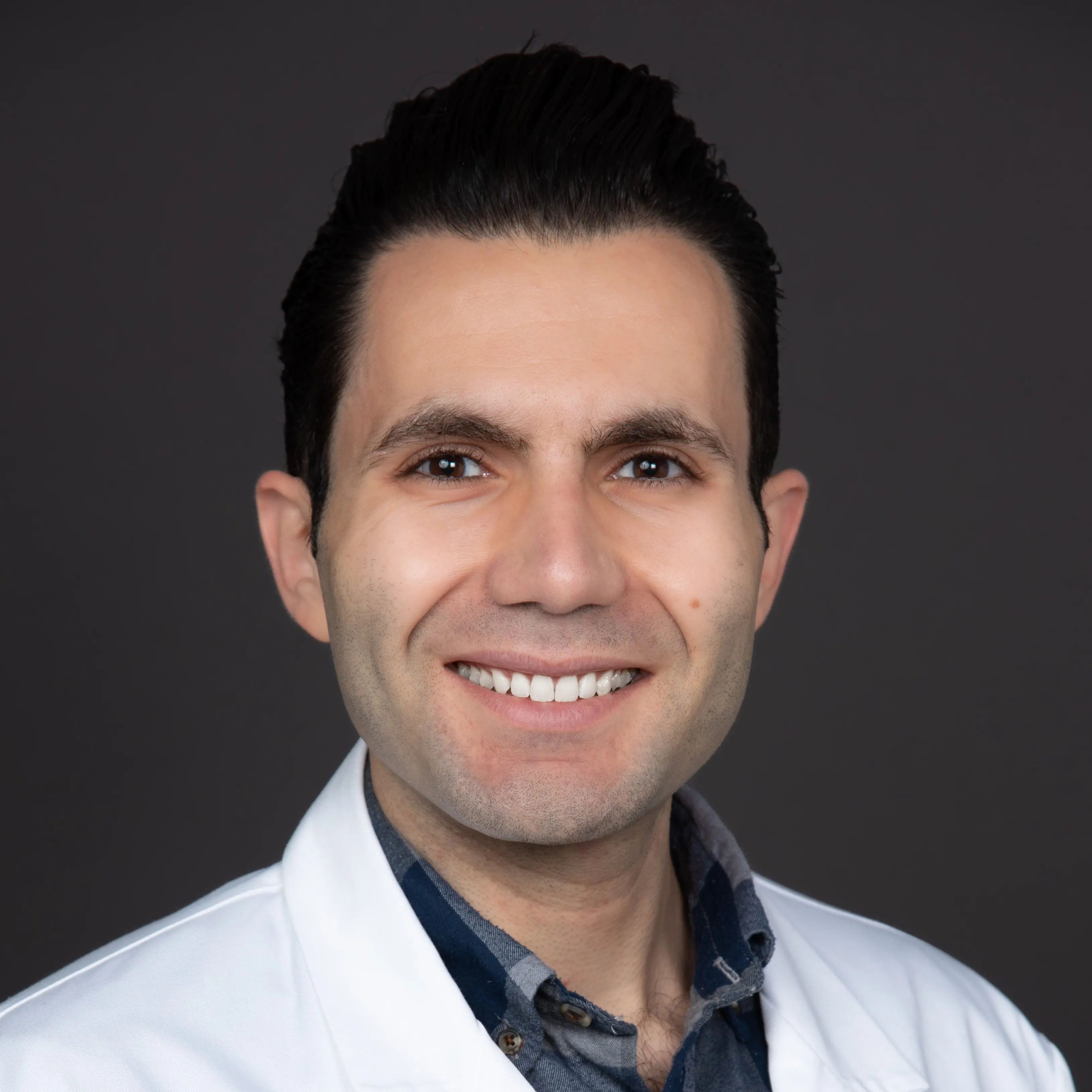
Written by Dr. Roupen Odabashian MD, FRCPC
Hematologist-Oncologist | Founder, MeDucation AI | Updated July 2026
The Verdict
Yes — you can pass on free resources alone. Most fellows who fail don't fail because they were outspent. They fail because they read passively, never did enough questions under timed conditions, and found out too late which parts of the blueprint they were weak in. Free NCCN Guidelines, your program's ASH benefits, PubMed, and disciplined self-testing will get a well-organized fellow across the line. The ABIM first-time pass rate was 90% in Medical Oncology and 93% in Hematology in 2025[2] — this is a hard exam, but it is not a slaughter, and the people passing it are not all buying $2,000 courses.
But here is what I'd actually pay for. One thing: a large, well-explained question bank you can run under timed conditions for six months. That's it. That is the single purchase with the best evidence behind it, and it is the one thing that is genuinely hard to replicate for free. The cheapest credible version of that is HOQ at $65 for six months[10]. If your program pays for ASH-SAP or ASCO-SEP, take it and spend nothing more.
Full disclosure before you read another word: I built and sell a heme/onc question bank (MeDucation AI, $225/year for fellows). I have an obvious conflict of interest in an article about whether question banks are worth money. So I'm going to tell you plainly: a fellow on a tight budget can get very far without paying me a cent, and I'll show you exactly how below.
The Table: What's Free, What Costs Money, and Is the Paid One Worth It
Free option | Paid counterpart | Is the paid one worth it? |
|---|---|---|
NCCN Guidelines — free with registration, no fee to view[5] | DeVita, Abeloff, Williams Hematology (textbooks; prices vary by edition and retailer) | No. Not for boards. NCCN is more current than any textbook and is closer to how the exam thinks. Buy a textbook for fellowship, not for the exam. |
ABIM blueprint + exam tutorial — free, official[3][4] | Any "board review guide" that summarizes the blueprint | No. Absolutely not. The blueprint is a free PDF that tells you exactly what percentage of the exam is breast, GI, coag, etc. Do not pay anyone to retype it. |
ASH-SAP + Hematology Review Series — free to fellows if your program enrolls in ASH Fundamentals for Hematology Fellows[6] | ASH-SAP 9th ed. purchased directly: $600 non-member digital, $470 member, $200 resident/student (ASH Store, checked 2026-10-15)[7] | Only if your program doesn't enroll. Ask your PD first. Most heme fellows are already paying $0 for this and don't know it. If you must buy, buy at the member/trainee tier, not the $540 tier. |
ASCO trainee membership (free for physicians in training) + free ASCO/ASH meeting education content | ASCO-SEP — 22-chapter digital book + 1,500+ question bank; see asco.org for current pricing (checked 2026-10-15)[8] | Worth it if your program buys it (training programs get group discounts, and ASCO membership is free for trainees, which qualifies you for the member price; see asco.org for current pricing). Paid out of pocket as a non-member, it's a real chunk of a fellow's month. |
Free Anki decks + your own cards | Spaced-repetition features bundled into paid platforms | Free wins on the algorithm. Anki's scheduling is excellent and costs nothing (except the iOS app). Paid tools win only on card generation time, not on the spacing science. |
Free trials and sample questions (BoardVitals offers a free trial; HOQ has a free demo) | A full question bank: HOQ $65/6 mo (2,500+ Qs)[10]; BoardVitals $429/6 mo, $259/3 mo, $159/1 mo (600+ Qs)[9]; MeDucation AI $225/yr (1,000+ Qs) | YES. This is the one. Buy a question bank. It is the highest-yield dollar you will spend. Which one is a budget question, not a pass/fail question. |
Program-provided board review lectures, journal clubs, tumor boards | Live/virtual board review courses — e.g., GW's 2026 Hematology and Oncology Best Practices full session is $2,400 at the resident/fellow rate ($2,800 for physicians)[13] | No, not out of your own pocket. If your program's education fund covers it, go. If it's your money and you have to choose between this and a Q-bank, buy the Q-bank ten times out of ten. |
The Money You Cannot Avoid
Before we argue about study resources, let's be honest about the number that actually hurts. The ABIM initial certification exam fee for Hematology or Medical Oncology is $2,325[1]. Late registration adds a non-refundable $400. An international test center adds $500. A rescore request costs $250[3].
A fellow sitting both boards is looking at $4,650 in ABIM fees alone, before a single question bank. That is the real reason this article exists. When people tell you "just buy everything, it's your career," they are usually not the ones paying that on a fellow's salary while servicing loans.
Register on time. The $400 late fee is the single most avoidable expense in this entire article. For 2026, hematology registration ran December 1, 2025 through June 15, 2026, with late registration June 16–28[3]. Put the deadline in your calendar the day you start fellowship.
What's Genuinely Free and Genuinely Good
NCCN Guidelines: free, and the actual source of truth
I want to be emphatic here, because I think fellows underrate this badly. NCCN states plainly that there is no fee to become a registered user on NCCN.org and to view the NCCN Guidelines[5]. That's it. Make an account, and you have the treatment algorithms that oncology in the United States actually runs on.
Why this matters for the exam specifically: the ABIM blueprint is dominated by treatment and care decisions. On the Medical Oncology certification exam, the largest content blocks are Breast Cancer (13.5%), Gastrointestinal Cancer (13.5%), Hematologic Neoplasms (13%), Genitourinary Cancer (12%), Thoracic Cancer (11.5%), and Palliative Care/Survivorship/Communication (11%)[4]. On the Hematology exam, it's Hematologic Neoplastic Disorders (35%), Coagulation (27%), Hematopoietic System (25%), Cellular Therapy (8%), and Transfusion Medicine (5%)[4]. Most questions describe a patient and ask what you'd do next.
NCCN's decision trees are structured as "patient presents like this → do this." That is the same cognitive shape as the exam question. When I was studying, I stopped reading NCCN like a document and started treating it as a set of flowcharts I had to be able to redraw from memory. That single change was worth more than any textbook chapter I read. Practical method, costs nothing: pick a disease site, open the algorithm, close it, redraw the tree from memory, then mark what you got wrong. That's retrieval practice, and it works.
Your ASH benefits — which you may already have and not know about
This is the biggest free lunch in heme/onc board prep and fellows routinely miss it. If your fellowship enrolls 100% of its fellows in ASH Fundamentals for Hematology Fellows (FHF), every enrolled fellow gets: free ASH Associate membership, online access to ASH-SAP (including the online Q&A bank of 250+ additional multiple-choice questions), online access to the Hematology Review Series (board-focused webinars), one complimentary ASH meeting registration per academic year, a discounted in-service exam, and complimentary publications including Hematology, the ASH Education Program[6]. Graduating fellows keep SAP and Hematology Review Series access through a grace period to December of their graduation year[6].
Bought individually, the ASH-SAP 9th edition digital runs $540 for non-members and $423 for members[7]. If your program is enrolled, that's $0. However, they do offer also enterprise prices. It's around $200-$225 per fellow when a full fellowship program signs up.
The ABIM's own free material
The blueprint PDFs and the exam tutorial are free and official[3][4]. The tutorial shows you the actual interface and question formats. The hematology certification exam is roughly 10 hours, four sessions of up to 60 questions each, with 100 total minutes of break time you control[3].
One nuance that most board-prep marketing gets wrong: ABIM's minimum passing score is an absolute standard, independent of how any group of candidates performs[3]. You are not competing against your co-fellows. There is no curve to beat. That fact should change how you interpret every "percentile" you see in a commercial question bank — more on that below.
PubMed, landmark trials, and free podcasts
Every trial on this exam is free to read in abstract form on PubMed, and many are free full text. Journal podcasts, ASCO Daily News, and The ASCO Post cost nothing and are excellent for the "what changed this year" layer. Free Anki decks circulate among fellows every year — quality is variable, so vet them, but the price is right and the scheduler underneath is the same one expensive tools license or reimplement.
What Is Actually Worth Paying For
One thing, mainly: a large bank of exam-style questions with real explanations, done under timed conditions, repeatedly.
The evidence for this isn't marketing. Retrieval practice — studying by testing yourself rather than re-reading — is one of the most robust findings in learning science, and it holds up in medical trainees specifically. Student-directed retrieval practice predicts licensing exam performance[11], and in graduate medical education, individual residents' independent retrieval practice with exam-style review questions significantly predicts year-over-year improvement in standardized exam scores[12]. Reading a chapter feels productive. Answering 40 questions and getting 14 of them wrong feels terrible and teaches you far more.
So what are you actually buying when you buy a Q-bank? Three things you cannot easily manufacture for free:
Volume of blueprint-mapped items. Writing good board-style questions is slow, skilled work. Buying 600–2,500+ of them for $65–$429 is genuinely cheap per item.
Explanations that tell you why the distractors are wrong. This is where the learning lives. A question that only tells you the right answer teaches you one fact. A question that dismantles all four wrong answers teaches you five.
Calibration. A performance dashboard that shows you're at 52% in coagulation and 81% in breast tells you where to spend October. You cannot get this from reading.
Now, about percentile feedback — the "you're in the 63rd percentile of test-takers" number that commercial banks advertise, including mine. Let me be straight, because this is exactly where board-prep companies oversell. The ABIM exam is not norm-referenced. Passing is an absolute standard[3]. A percentile against other question-bank users is not a prediction of pass/fail, and anyone implying otherwise is selling you something. What percentile feedback is genuinely good for is calibration against your own overconfidence — most fellows badly misjudge which subjects they're weak in, and a comparison against a peer distribution is a useful reality check. That is a real benefit. It is not a pass guarantee, and I'd treat "100% pass guarantee" marketing (BoardVitals advertises one[9]) as a refund policy, not a psychometric claim.
The honest ranking, on price
HOQ ($65 for six months, 2,500+ questions) is the best pure value in this market and I say that as a competitor[10]. It's written by a single practicing oncologist, the issue with this question bank is that the explanations are unorganized, very long, and copy-pasted from PubMed, and many fellows struggle reading the explanations, and it's been iterated on since 2014. however, for a fellow with $65 to spend, that is the buy. It is not a weakness that it's terse — for rapid-fire review that's a feature. If you want the full feature-by-feature breakdown, I've written a head-to-head comparison of the heme/onc question banks for 2026.

What heme/onc board prep actually costs in 2026. Prices verified from vendor pages in July 2026. Teal = high value per dollar; amber = only if your program pays.
Correction, checked 2026-10-15: the ASH Store lists ASH-SAP 9th Edition (digital) at $200 for residents and GradMed students ($470 for members, $600 for non-members), not the $180 shown in the chart, and BoardVitals lists $159 for 1 month, $259 for 3 months and $429 for 6 months, so the chart's "BoardVitals (3 mo) $159" is the 1-month price. The chart's ASCO-SEP bar ($440, the member price) could not be verified; see asco.org for current pricing.
ASCO-SEP pairs a 22-chapter digital book with a 1,500+ question bank with rationales for every option and timed practice exams[8]. It is the closest thing to an "official" med-onc study system. Pricing is on asco.org (see asco.org for current pricing)[8], and since ASCO says membership is free for trainees and members get significant discounts (checked 2026-10-15), no fellow should need to pay the non-member rate. Training programs get discounts on top of that, so push your PD.
Where MeDucation AI actually fits (and where it doesn't)
My conflict is on the table, so here's the honest version. MeDucation AI's fellow plan is $225/year (also billed in 3- or 6-month terms, with a one-week free trial). What it is: a heme/onc question bank whose 1,300+ questions are reviewed by practicing board-certified hematologist-oncologists. Every question explains why the right answer is right and why each distractor is wrong, with embedded images and tables, and direct PubMed links to the underlying evidence. There's AI read-aloud and active reading tools. Alongside it: a Notebook with auto-regenerating mind maps, a living knowledge graph, AI-generated FSRS spaced-repetition flashcards (the same algorithm family Anki uses), deck sharing, and "Ask My Notes." Plus a Mind Palace that turns uploaded lectures into narrated video lessons, an expert-curated podcast station, and program-level tools.
education AI is not only a question bank; it's a place to study no matter what your studying style is.
If you are a visual learner, you can turn your notebook and your notes into images, and you can turn the back of your flashcards into images. If you like to listen to podcasts, we have gathered all the best podcasts for Hematology/Oncology fellows on the platform. Under our podcast section, you will find podcasts from Oncology Brothers to OncDocs the Fellow on Call, all organized under categories.
Beyond a question bank, we also build a tool for Hematology/Oncology fellows to create their journal club lectures. When I was a fellow, I spent so much time copy and pasting sentences from PDF documents to PowerPoints to prepare for my journal club. When I created Meducation AI, all I have to do is upload a PDF, and it can turn it into a PowerPoint. I can turn each one of the PowerPoint slides into images and then download it. That cuts the time of preparation for my slides by 80%. All I have to do now is study the trial
The feature I actually think is interesting for the argument in this article is the Learning Hub: you upload any PDF, lecture, or guideline, and it generates board-style quizzes and flashcards from it, with performance reports. These are very different from multiple-choice questions that you generate from general chatbots like Claude or ChatGPT. We use a multi-agentic system to generate high-quality multiple-choice questions designed specifically for Hematology Oncology fellows. That is a genuine bridge between the free tier and the paid tier: the content stays free and authoritative, and what you're paying for is the conversion of that content into retrieval practice. I'm biased, obviously. But I'd rather explain the actual mechanism than tell you it's magic.
What MeDucation is not: it is not a reason to skip NCCN, and it is not necessary to pass. A fellow with $65 and discipline will beat a fellow with $225 and no plan.
What's a Waste of Money
I'll say it plainly.
Buying a textbook to study for boards. These are the wrong tool for a timed multiple-choice exam. They are too long, they go deep on material the blueprint barely touches, and by the time you've read one, the regimen changed. Use them to look things up during fellowship. Do not read them cover to cover in your last six months.
A $2,000+ board review course you pay for yourself. GW's 7-day full session is $2,400 for residents and fellows — $1,800 for the hematology session, $1,900 for the oncology session[13], and other courses are in that neighborhood. These courses are good, they are dense, expert-taught, and morale-boosting. They are also, dollar for dollar, a passive-learning purchase, and passive learning is exactly the mode the evidence says underperforms[11][12]. If your program or an education stipend covers it, go and enjoy it. If it's your own money and it means you skip the question bank, you have inverted your priorities.
Buying two or three question banks "to be safe." Fellows do this out of anxiety. Doing 2,600 questions once, superficially, is worse than doing 1,000 questions twice with a spaced-repetition pass over everything you got wrong. Depth beats breadth here. Pick one bank and finish it.
Paying for a spaced-repetition "system." Anki is free on desktop and Android. The algorithm is the algorithm. If a paid tool saves you the hours of card-making, that's a legitimate time purchase — but be clear that you're buying time, not science.
The $400 late registration fee. Yes, I'm listing it again. It is pure waste and it is entirely under your control[1].
The $0 Study Plan — Six Months
This is a real plan, and it passes. It's the free-tier version of the schedule I lay out in my 6-month study plan for the ABIM hematology and oncology board exams.
Day 1 Set the map. Download the ABIM blueprint for your exam[4]. Write the content percentages on a single sheet and tape it above your desk. Allocate your weekly hours in proportion. If coagulation is 27% of your hematology exam, it gets 27% of your time — not 5% because it's boring. Register for the exam. Confirm with your coordinator whether your program is enrolled in ASH FHF[6] — if yes, activate ASH-SAP and the Hematology Review Series today. Then go to Meducation AI if you are using it. Upload your last year ITE. This will help Meducation AI to give you personalized feedback when you are solving the questions.
Retrieval every single day. Twenty minutes of Anki or our proprietary, easy-to-use flashcard app embedded in Meducation AI , daily, no exceptions. This is the non-negotiable core[11][12].
Months 1–5 — Questions, Questions Questions. If you have ASH-SAP through FHF, that's 250+ Q&A bank questions plus the SAP chapter content — work through all of it[6]. Use free trials and demo questions from the commercial banks. Use your in-service exam feedback as a diagnostic, not a verdict.
Podcasts - These are great ways to learn on your way to work. You can find the podcasts on Apple or Spotify, or you can use the Meducation AI podcast feature where everything is organized for you
Months 4–6 — Simulate. Do the free ABIM exam tutorial so the interface holds no surprises[3]. Then block four hours on a weekend and answer 60 questions from whatever you have, timed, no interruptions. The skill of sustaining accuracy at hour eight is a separate skill from knowing the medicine, and you have to train it.
Final month — Weakness triage. Rank your subjects by how much they scare you, weight by blueprint percentage, and spend your last four weeks strictly on the top of that list. Re-derive the NCCN trees. Sleep.
FAQ
Can I really pass with zero paid resources?
Yes — if your program is enrolled in ASH FHF (giving you ASH-SAP and the Hematology Review Series at no cost)[6], or your program buys ASCO-SEP, you effectively have premium resources for free and you should simply use them. Even without any of that, NCCN + PubMed + free Anki + relentless self-testing is a passing strategy. It requires more discipline, not more money.
If I only buy one thing, what should it be?
A question bank, purchased early enough to actually work through twice. Not a textbook, not a review course, not a second question bank.
Does a higher question-bank percentile mean I'll pass?
No. ABIM's passing standard is absolute and independent of how other candidates perform[3]. Percentiles from any commercial bank — mine included — are a calibration signal about your relative preparation, not a probability of passing. Use them to find weak subjects, not to feel safe.
Is the ASH-SAP or ASCO-SEP worth buying if my program won't?
ASH-SAP is worth it at the trainee/member price tiers ($200 resident/student, $310 associate, $470 member; ASH Store digital prices, checked 2026-10-15) far more than at the $600 non-member tier[7] — and ASH membership is a cheap way to get into a lower tier. For ASCO-SEP, see asco.org for current pricing[8]; ASCO says membership is free for trainees (checked 2026-10-15), so join first and check asco.org for the member price and any training-program discounts before you commit. Either way, push your program director first: programs get group discounts, and this is exactly what education budgets exist for.
I failed. What should I change?
First: the ultimate pass rate across three subsequent exam years is 98%[2]. Nearly everyone who keeps going gets there. Second: don't respond by buying more stuff. Respond by changing the mode. Most repeat candidates I've talked to were reading, not testing. Rebuild around timed questions and a wrong-answer log, and weight your time to the blueprint percentages rather than to what you find interesting.
The Bottom Line
Heme/onc board prep is an expensive market attached to an already expensive exam. The exam fee — $2,325 per board[1] — is the unavoidable cost. Almost everything after that is optional, and the free tier in our field is unusually strong: NCCN is free and it is the source of truth[5]; ABIM tells you the blueprint for free[4]; and if your program enrolls you in ASH FHF, some of the best paid material in hematology arrives at $0[6].
If you want the wider view of how these pieces fit together, see the complete guide to heme/onc board prep for 2026. Otherwise: spend $65 on a question bank. Spend the rest of your money on rent, loans, and childcare. And if you decide to spend more than that — with me or anyone else — do it because you want the time saved, not because someone convinced you that you couldn't pass without them. You can.
References
American Board of Internal Medicine. Exam Fees and Refund Policies. https://www.abim.org/certification/exam-fees-refund-policies/
American Board of Internal Medicine. Internal Medicine and Subspecialty Certification Examinations: First-Time Taker Pass Rates (2021–2025). https://www.abim.org/media/5hhbskg2/certification-pass-rates.pdf
American Board of Internal Medicine. Register, Prepare and Take Your Subspecialty Certification Exam — Hematology (exam dates, exam-day schedule, scoring standard, exam tutorials). https://www.abim.org/certification/becoming-certified-in-a-subspecialty/register-prepare-for-and-take-your-exam/hematology/
American Board of Internal Medicine. Exam Blueprints — see Medical Oncology Certification Blueprint and Hematology Certification Blueprint. https://www.abim.org/about/abim-exams/blueprints/
National Comprehensive Cancer Network. NCCN Guidelines — https://www.nccn.org/guidelines/nccn-guidelines. Statement that registration is free ("There is no fee to become a registered user on NCCN.org and to view the NCCN Guidelines"): NCCN Mobile Apps; free registration at https://www.nccn.org/register
American Society of Hematology. Accessing Your ASH Fundamentals for Hematology Fellows Benefits. https://www.hematology.org/education/educators/resources-for-training-program-directors/fundamentals-for-hematology-fellows/benefits-access
American Society of Hematology. ASH Store — ASH Self-Assessment Program (ASH-SAP), Ninth Edition (member/non-member/trainee pricing). https://apps.hematology.org/store/
American Society of Clinical Oncology. ASCO's Medical Oncology Self-Evaluation Program (ASCO-SEP) — Digital Subscription. https://education.asco.org/product-details/ASCO-SEP-Digital-Subscription. Pricing: see asco.org for current pricing; see also the ASCO-SEP FAQs (PDF)
BoardVitals. Hematology and Oncology Board Review Question Bank (plan pricing). https://www.boardvitals.com/oncology-board-review
Hematology Oncology Questions (HOQ). hemeoncquestions.com (subscription pricing and question count). https://hemeoncquestions.com/
Deng F, Gluckstein JA, Larsen DP. Student-directed retrieval practice is a predictor of medical licensing examination performance. Perspect Med Educ. 2015;4(6):308–313. https://pmc.ncbi.nlm.nih.gov/articles/PMC4673073/
Nelson A, Mohammed A, An A, Traba C. Testing the Effects of Individual Residents' Retrieval Practice on Standardized Examination Scores. Med Sci Educ. 2024;34(3):647–652. https://pmc.ncbi.nlm.nih.gov/articles/PMC11180066/
George Washington University SMHS CME. 2026 Hematology and Oncology Best Practices — Live Course Options (registration fees: 7-day full session $2,800 physician / $2,400 resident-fellow; hematology session $2,100 / $1,800; oncology session $2,200 / $1,900). https://cme.smhs.gwu.edu/...2026-live-course-options
Disclosure: I am the founder of MeDucation AI, which sells a hematology-oncology question bank and study platform. Prices and product details above were verified against publicly published pages in July 2026 and may change. Where a vendor does not publish pricing, I have said so rather than estimate.